


Cancer starts in the mitochondria, not in DNA.
Researchers have only recently pinpointed a key factor driving rising cancer rates among young people—the gut.
According to the WSJ, experts are "now delving into people’s bodies and childhood histories for clues".
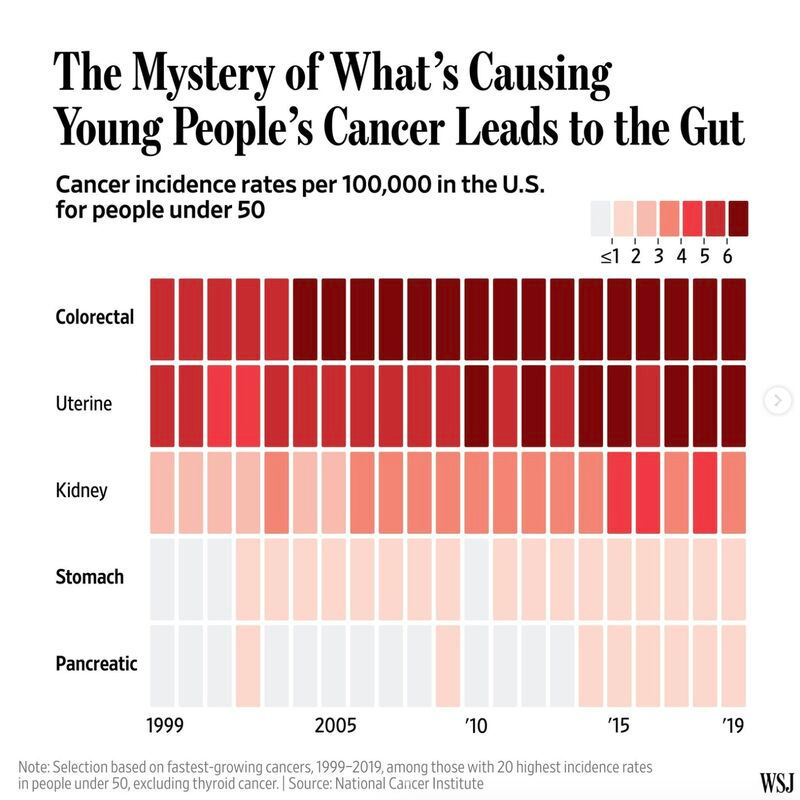
I find it almost comical that this is news to so many.
For decades, we’ve been told that cancer is a genetic disease caused by random DNA mutations.
But, the reality is far different.
Cancer is actually a disease of metabolic and mitchondrial dysfunction.
Let’s get the facts straight:
Mitochondria are the power plants of your cells. When they function properly, you feel energized, resilient, and healthy.
When mitochondria are damaged and broken, however, cells lose control and switch to an emergency backup mode—fermenting sugar (glucose) instead of using oxygen. This process, known as the Warburg Effect, is a hallmark of cancer cells.
So, what actually damages your mitochondria?
Chronic high blood sugar & insulin resistance
Refined seed oils, refined sugars, refined carbohydrates/grains, and any other processed and refined foods that further drive oxidative stress
An overwhelming toxic load from food, air, water, products, supplements, and many other substances that currently flood our mainstream diet and lifestyle
Sedentary lifestyle and lack of movement
Chronic stress
Poor sleep
Deeply rooted emotional trauma
If your mitochondria are compromised, your cells can’t produce energy efficiently.
And, when they shift to emergency mode, it sets the stage for cancer—and a host of other health issues.
So, what’s the solution?
The key to prevention (and even supporting treatment) is to protect and restore mitochondrial health.
Consider these strategies:
Balance Blood Sugar – Cut refined sugars and support liver detoxification to address insulin resistance.
Eliminate Processed Foods – Remove refined seed oils, sugars, carbohydrates, and other processed foods that drive oxidative stress.
Move Daily – Regular exercise strengthens mitochondria.
Prioritize Sleep & Stress Management – Both are essential for cellular repair.
Reduce Toxin Exposure – Ensure that your food, water, air, and products are as clean and non-toxic as possible.
Focus on Cleansing – Explore colon, liver, parasite, mold, and heavy metal detoxification to reduce the toxic load on your organs and systems and other daily cleansing modalities like intermittent fasting, juicing, hyperthermic conditioning (deep sweating), breathwork, cold immersion, and lymphatic drainage
The best part? These changes don’t just target cancer—they boost your energy, metabolism, longevity, and overall vitality.
Cancer may begin in the mitochondria, but so does healing.
According to Dr. Andrew Chan, director of epidemiology at Mass General Cancer Center in Boston, “We’re all concerned and want to do something quickly and act quickly, but we want to do so based on sound science”.
I’m sorry, but I don’t have time to wait for the science to catch up.
Wondering how to start reducing your toxic load?
Take my free Detox Phase Quiz to uncover your physical symptoms and find out where to start your cleansing journey based on your body’s current needs.
Then, explore The Cleanses — a series of powerful digital cleanses that will guide you through a transformative detox journey towards optimal health and vitality, step by step.
Whether you’re a total beginner or feel ready for deeper cleansing, these programs are designed to help you feel like your radiant, vibrant self again.
Thanks Meghan. You may find it interesting that my Dad's cousin (Herbert Hadler) was an early researcher into the link between cancer and the mitochondria. Here are links to some of his works:
https://www.researchgate.net/scientific-contributions/H-I-Hadler-62673300
This goes back a long way. We all visited him in Carbondale in the late 1970's - so this line of investigation goes back a long way.!