


Summary of Key Points from the Coalition for Clean Air Webinar
I attended a 2.5-hour webinar hosted by the Coalition for Clean Air so you don’t have to—because together, we can work to prevent the "disaster after the disaster”.
Main Takeaways
Smoke, soot, and ash contain lingering hazardous toxic chemicals. Avoid exposure to these substances whenever possible.
Long-term impacts of exposure to these hazardous toxic chemicals include respiratory issues, cardiovascular problems, mental health issues, and potential cancer risks.
Do not rely on smell, as clear-looking or unscented air can still be unsafe. If the AQI is poor, minimize your outdoor exposure. However, even if the AQI is good and if the sky is blue, the air can still contain hazardous toxic chemicals, as they are not measured by AQI. These hazardous toxic chemicals are quite expensive to measure, and there are currently no affordable consumer devices to measure these toxic chemicals in the air.
Monitor The Air Quality
Use reliable sources to monitor the air quality near you on a daily basis. Stay vigilant about air quality every single day if you live in a metropolitan area, not just during wildfires.
Most weather apps (even the Apple Weather app) now show AQI (air quality index), but it can vary by region.
Check airnow.gov for PM 2.5, PM 10, and ozone levels.
Check fire.airnow.gov for wildfire-specific PM 2.5 levels.
Check iqair.com for detailed breakdowns and coverage.
Check map.purpleair.com for detailed breakdowns and coverage. This is likely the most accurate source, as there are more local monitors in your local area.
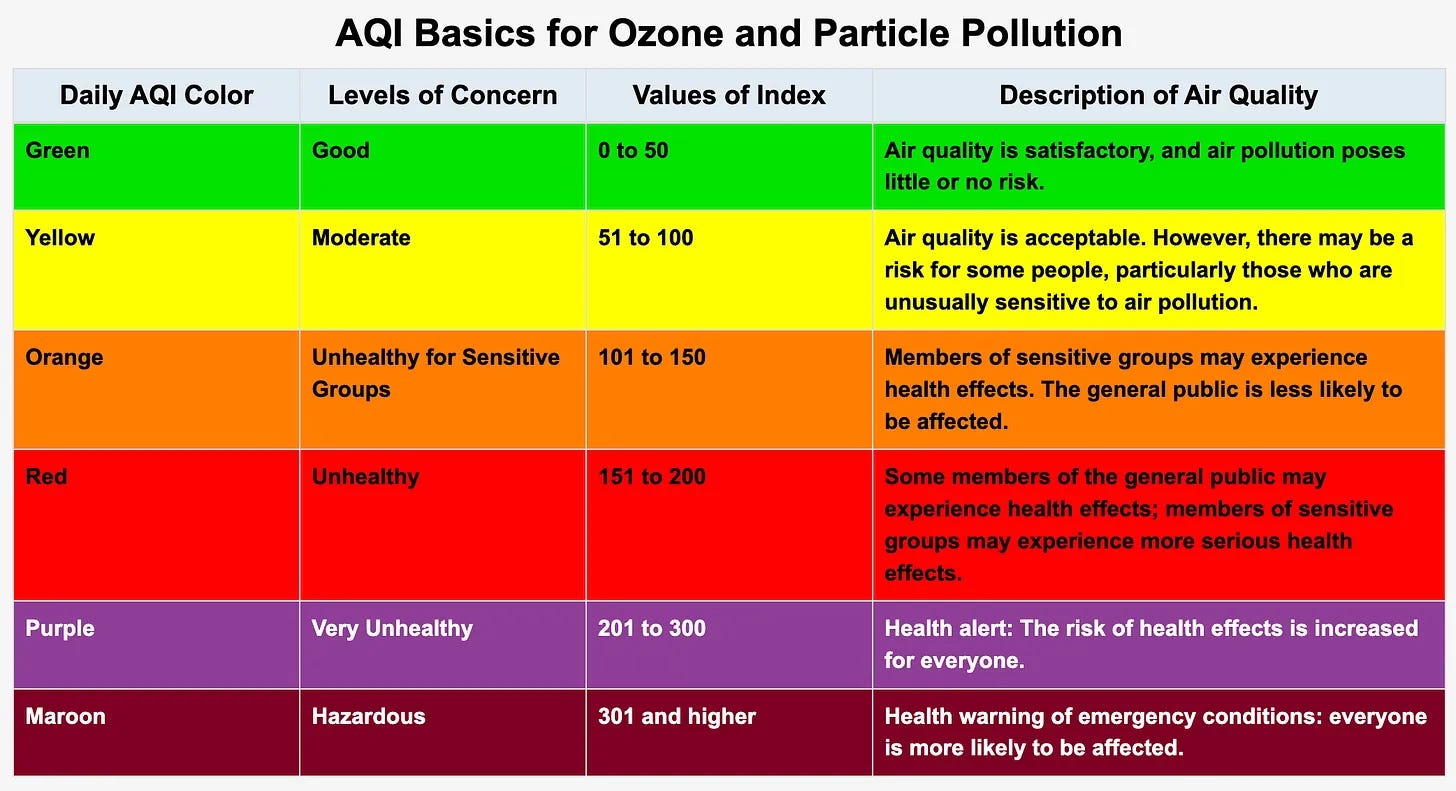
I personally avoid being outdoors if the AQI is above 100, and you should too.
Check apps like Watch Duty or Windy for real-time wind patterns affecting air quality. If the winds from the affected areas are blowing towards you, then you are at greater risk.
Do not rely on smell, as clear-looking or unscented air can still be unsafe. If the AQI is poor, minimize your outdoor exposure. However, even if the AQI is good and if the sky is blue, the air can still contain hazardous toxic chemicals, as they are not measured by AQI. These hazardous toxic chemicals are quite expensive to measure, and there are currently no affordable consumer devices to measure these toxic chemicals in the air.
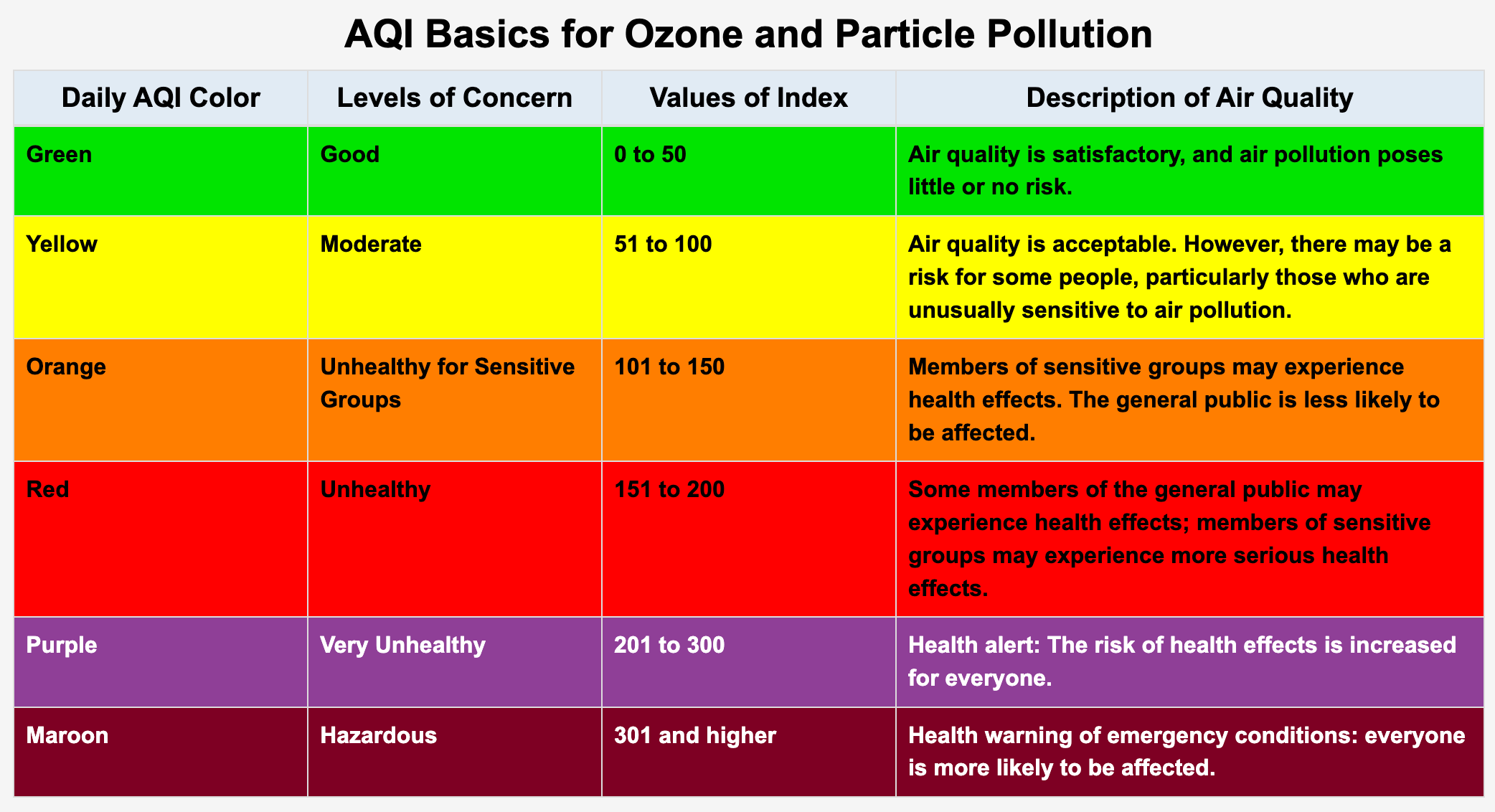
Hazardous Toxic Chemicals in Wildfire Smoke and Ash
Toxic chemicals include hydrogen cyanide, dioxins, PAHs (carcinogens in soot and ash), asbestos, heavy metals like lead, cadmium, and chromium, and VOCs (Volatile Organic Compounds) like benzene.
Materials from burned structures (i.e. plastics, electronics) release additional hazardous substances.
Again, DO NOT RELY ON SMELL, as clear-looking or unscented air can still be unsafe. Even if the AQI is good, the air can still contain these hazardous toxic chemicals.
Public Health Impacts
Immediate and long-term health effects include:
Immediate symptoms: Coughing, difficulty breathing, fatigue, headaches, dizziness, chest tightness, irritated eyes, throat, and/or lungs.
Respiratory issues: Asthma attacks, chronic obstructive pulmonary disease (COPD), respiratory infections (like bronchitis and pneumonia), lung disease.
Cardiovascular effects: Heart attacks, strokes, and abnormal heart rhythms.
Mental health: Stress, anxiety, and depression.
Increased risk of certain cancers.
Children, pregnant women, the elderly, and individuals with pre-existing health and respiratory conditions are at higher risk.
Improve Your Indoor Safety
Keep windows and doors closed.
Take off your shoes when you come inside your home to avoid bringing contaminants into your home.
Clean pets’ paws after outdoor exposure as well.
Use an air purifier with both a HEPA filter and an activated carbon filter that also has a high CADR score for smoke, such as AirDoctor (discount applied at checkout), Jaspr, or Molekule. I have one in every single room of my house, but I especially recommend having one in your bedroom where you sleep.
Create a “clean room” in your home by closing off a space entirely where you spend the majority of your time and running an air purifier. This is especially important if you have young children or pets.
Ensure HVAC systems have proper filtration and regularly change filter(s). They should ideally be changed every 2–3 months. Look for a MERV rating as high as your HVAC system can handle—ideally around 13 or higher.
Ensure that your apartment buildings, offices, or schools that your children go to have operational HVAC systems.
Avoid burning scented candles, air fresheners, or other fragranced products.
Avoid using gas stoves.
Swap out harsh household cleaners for non-toxic ones like Branch Basics (MEGHAN15 at checkout) and Blueland (discount applied at checkout).
Be cautious of contaminated water supplies post-fire. Common contaminants include VOCs (i.e. benzene) and excessive sediment. Follow boil water advisories and avoid using water for drinking, bathing, or cooking if contamination is suspected. Use a reverse osmosis water filter like AquaTru (discount applied at checkout) or buy spring or mineral water from a trusted reliable source.
Avoid vacuuming without HEPA filters, as this stirs up particles, and never dry sweep ash.
Avoid eating local produce grown near disaster areas due to potential contamination.
Do not let your children go back to schools in or near affected areas, and do not go back to (or let your friends or loved ones go back to) homes in or near affected areas. Challenge insurance companies if they pressure you to return.
Improve Your Outdoor Safety
Limit your outdoor exposure
if you have asthma or other respiratory issues, if you’re pregnant, if you’re elderly, and if you have young children (with developing lungs) and/or pets.
if the winds from the affected areas are blowing towards you.
if you smell smoke or see ash.
if the AQI levels are high (above 100).
Wear a certified N95 or KN95 mask or a P100 mask if outdoors in poor quality air.
Avoid doing any exercise outdoors for now. Use indoor treadmills and do any other movement/physical activity indoors.
Keep outdoor trips short and essential.
Clean outdoor surfaces using wet methods or HEPA vacuums. Never dry sweep ash, and do not use leaf blowers.
If you are visiting a burn site or involved in the cleanup of soot or ash, use personal protective equipment (PPE) like certified masks, Tyvek suits, protective footwear, gloves, protective clothing, and enclosed goggles. Shower when you come home.
Watch for symptoms like coughing, difficulty breathing, fatigue, headaches, dizziness, or chest tightness. If you notice these symptoms, go inside immediately.
Again, most importantly, do not rely on smell. Clear-looking or unscented air can still be unsafe. Even if the AQI is good, the air can still contain these hazardous toxic chemicals.
Lessons Learned and Future Precautions
Historical disasters (i.e. 9/11) demonstrate the need for long-term public health planning.
FEMA and other agencies may apply toxic fire retardants to control ash spread, which can pose additional health risks.
The duration of toxic air and the radius of exposure remain uncertain. This event is unprecedented, and variables like the time it takes to clean up the ash, along with wind direction and speed, will significantly influence the level and type of exposure we face.
Ash and toxic particles may continue to circulate for 1-2 years during cleanup efforts, which will require ongoing monitoring and protective measures.
Stay mindful of air quality daily, especially if you live in a metropolitan area—not just during wildfire events. Take intentional steps to safeguard your lungs, your overall health, and the health and well-being of your children, pets, family, and loved ones in areas impacted by wildfire smoke and ash.
My heart is with anyone and everyone affected during this challenging time. By following these preventative measures and staying informed, you can significantly minimize exposure to harmful toxins and prioritize your health and take part in reducing the public health impacts of the Los Angeles wildfires.
Notes from the Coalition for Clean Air Webinar
Here are my comprehensive, detailed notes from the 2.5-hour webinar by the Coalition for Clean Air if you’d like to dive deeper into the content on your own. CCA also compiled all of the wildfire safety and air quality resources shared by the speakers along with additional trusted tools and resources here.
List of Speakers
Dr. John Balmes, Professor of Medicine, University of California at San Francisco, member of the California Air Resources Board, author of more than 200 papers or chapters on occupational and environmental respiratory disease-related topics
Ed Avol, Professor Emeritus, USC School of Medicine, co-author of the USC Children's Health Study, author or co-author of more than 150 articles on air pollution chemistry and health effects
Dr. Gina Solomon, Chief, Division of Occupational, Environmental & Climate Medicine, University of California at San Francisco, former Deputy Secretary for Health and Science, California Environmental Protection Agency
Dr. Rania Sabty, Independent Contractor, Kleinerman and Associates, occupational health and safety expert
Tim Dye and Story Schwantes, TD Environmental Services, air quality monitoring experts
Jane Williams, Executive Director, California Communities Against Toxics, award-winning environmental health and justice expert
Dr. Joseph Lyou, President & CEO, Coalition for Clean Air, 12-year member of the South Coast AQMD Governing Board
Main Message
Smoke, soot, and ash contain hazardous toxic chemicals.
Avoid exposure to smoke, soot, and ash.
Concerning Pollutants
PM 2.5 (fine particulate matter) — Criteria air pollutant measured continuously
PM 10 (small particulate matter) — Criteria air pollutant measured continuously
CO — Criteria air pollutant measured continuously
Ozone — Criteria air pollutant measured continuously
Hazardous Air Pollutants — Hundreds of gases and particles that are more challenging to measure (but it doesn’t mean that they are not in the air!)
AQI (Air Quality Index)
This guide provides ways to protect your health when particle pollution reaches unhealthy levels.
Air Quality Data Sources During and After Wildfires
airnow.gov (PM 2.5, PM 10, ozone)
fire.airnow.gov (PM 2.5)
Jane Williams — Executive Director, California Communities Against Toxics, award-winning environmental health and justice experts — Dangers From Exposure To Ash From The Fires in Los Angeles
AQI does not measure the contaminants and pollutants that we care deeply because they are very expensive to measure
People do not understand the enormity of what we’re dealing with.
If you are anywhere near the burn zones, then you are breathing it numerous toxic species such as:
Hydrogen cyanide
Hydrogen fluoride
Hydrogen cyanide
Isocyanates
Polycyclic aromatic hydrocarbons (PAHS)
Dioxins
Furans
Toxic organic compounds (benzene toluene, xylenes, syrene, and formaldehyde)
Metals (lead, chromium, cadmium, arsenic)
Remnants of burned residential structures may contain:
Respirable crystalline silica — typically quartz — from demolished concrete used in foundations, walls, and roofing tiles
Items like home electronics and melted vehicles are sources of exposures to toxic metals like lead, cadmium, and aluminum
Many homes have plastic furniture and vinyl building materials which give off a host of VOCs when burned as well as hydrogen cyanide
PAHS are potentially carcinogenic substances found in soot or burn ash
Asbestos may also be present in fire debris, depending on the age of the affected buildings
The challenge is to balance the competing interests of the desire for re-entry and re-occupation with the physics of ash inhalation.
We miscalculated, misunderstood, and let the inertia for re-entry, repair, and restoration override common sense health protections in New York after 9/11.
There are a lot of particles in the air that are not measured in the Air Quality Index that are incredibly toxic.
Dr. John Balmes, Professor of Medicine (pulmonologist), University of California at San Francisco, member of the California Air Resources Board
There is clear evidence of an association between wildfire smoke and respiratory health.
Asthma exacerbations are significantly associated with higher wildfire smoke in nearly every study.
Exacerbations of chronic obstructive pulmonary disease (COPD) are significantly associated with higher wildfire smoke in most studies.
There is growing evidence of a link between wildfire smoke and respiratory infections (pneumonia, bronchitis).
For people with pre-existing cardiovascular conditions, there is increasing evidence that there is a link between wildfire smoke and acute cardiovascular effects (like heart attack, heart failure, stroke, all respiratory causes, and abnormal heart rhythms).
Wildland Firefighter Health Effects
Firefighters are the most heavily exposed by far to wildfire smoke.
They experience cross-shift changes in lung function, urinary biomarkers of exposure, and blood biomarkers of inflammation.
They experience pre-post season changes in lung function, airway responsiveness, and airway inflammation.
Do the fire season-associated changes persist?
For career durations between 5-25 years, wildland firefighters had an estimated increased risk of lung cancer (8 percent to 43 percent) and cardiovascular disease mortality (16 percent to 30 percent).
Dr. Gina Solomon, Chief, Division of Occupational, Environmental & Climate Medicine, University of California at San Francisco, former Deputy Secretary for Health and Science, California Environmental Protection Agency
Drinking water contamination is very prominent after a fire in the neighborhoods where the fire occurred.
This happened after both the Santa Rosa fire as well as the Camp Fire.
We typically see two problems with water after a wildfire:
Excessive sediment contamination
Potential microbial contamination
Boil water advisory
VOC (Volatile Organic Compounds) contamination
Benzene, methlyene chloride
Smoke in de-watered service lines
Need to flush lines repeatedly
Replace severely contaminated lines
Do not drink, shower, use, or touch this water (these advisories are in place for Pacific Palisades and Pasadena)
The firefighters are trying to fight the fire and use a lot of water to do so, so the pressure is negative (like a vacuum) which brings smoke back into the water supply and contaminates the water.
They will be testing the water system/supply in the affected areas.
It’s hard to know how far from the fire is safe. The wind blows in different directions every single day, so there is really no magic distance. Is the wind / was the wind blowing towards you during a critical time?
Ed Avol, Professor Emeritus, USC School of Medicine, co-author of the USC Children's Health Study, author or co-author of more than 150 articles on air pollution chemistry and health effects
We definitely have to think about the lungs and the heart, but we also need to remember that these small particulates can get into every organ and system within the body, even the brain.
We are looking at a wide range of outcomes when it comes to health issues, including even mental health issues (like anxiety, stress, post-traumatic stress, depression).
Where the wind blows and how the wind blows can really affect if these small particles can affect you.
If you have ash on your outdoor tables, backyards, cars, then this is an indication that the wind has been blowing in your direction. Wetting down the ash in your backyard before trying to sweep it up while wearing a mask is a good idea.
If you have children who have lungs growing very rapidly, then you want to try to protect their lungs and hearts.
Dr. Rania Sabty, Independent Contractor, Kleinerman and Associates, occupational health and safety expert — Air Quality, Public Health, and What To Do Next
A lot of smoldering debris may remain for weeks and could reignite if combined with combustible materials or if oxygen becomes available (i.e. disturbing debris during cleanup operations.
Exposure to wildfire smoke made up of particulate matter can cause eye, nose, throat, and lung irritation as well as other health impacts.
The ash that has been left behind may include asbestos, lead acid batteries, lithium ion batteries, paints and thinners, bulk pesticides, bulk fertilizers, lead, heavy metals, fire retardants, PFAS, transformers, PCBs, petroleum products, air conditioners, electrical transformers, and so on.
Personal Protective Equipment (PPE)
Depending on the site, the following PPE may be recommended:
Protective clothing ranging from standard coveralls to Tyvek suits
Respirator ranging from an N95 to a powered air purifying respirator for high exposure and strenuous work
N95 (or KN95) filters have limitations
Protective footwear with steel toe and insole. A chemical resistant boot or outer boot may be required for some work.
Disposable cut/abrasive resistant work glove. A chemical resistant globe may be required for some work.
Fully enclosed goggles (better for ash) or safety glasses
Ear protection in noisy areas
Hard hat or safety helmets
Baby wipes
Do not take contaminants back to your family, your car, or your home
Dusts Containing Fire Retardant, Ash, Asbestos, Silica, and Other Toxins
If in doubt about respirators, see your supervisor
An N95 or greater respirator may be acceptable for some activities
Use an elastomeric, half-mask respirator with N, R, or P-100 series filters if asbestos, ash, or fire retardants may be present
If airborne contaminants are causing eye irritation, full-face respirators with P-100 organic vapor/acid gas combination cartridges should be used
Surgical masks or face gaiters should NOT be used because they do not provide adequate protection
Replace filters when breathing becomes too difficult or if you detect an odor through organic vapor cartridges
Try to apply the following engineering controls in addition to wearing a respirator:
Wet methods
Ash approved HEPA vacuum
Minimize particulate matter (dust) production
Do not use a vacuum outside that is not approved for ash and that does not contain a HEPA filter
Do not dry sweep
Respirators (i.e. N95)
Reduce exposure to particulate matter but not all pollutants (i.e. VOCs, gases)
This may mitigate short-term physiological effects of particulate matter (evidence is limited in healthy adults)
No masks are approved for children (NIOSH certifies N95s)
Safety of prolonged use is not evaluated in adults with severe heart or lung disease
After A Fire
Walking/working surfaces may be wet, slippery, and unstable. Spread sand and wear slip resistant footwear if possible to reduce slips and falls.
Wear personal protective equipment, including hard hats, safety shoes, safety glasses, work gloves, and ear plugs.
Do not stand or walk under loads being hoisted by cranes and other heavy equipment. Be sure all rigging equipment is inspected and properly hitched to a load before it is hoisted. This includes sling, hooks, and shackles.
Stay away from heavy equipment in swing radius.
Avoid contact with stagnant water. If exposed to stagnant water, wash and decontaminate yourself and any contaminated equipment immediately.
Jane Williams — Executive Director, California Communities Against Toxics, award-winning environmental health and justice experts — Lessons from Lahaina
After 9/11, the former EPA head admits that she was wrong to tell New Yorkers post 9/11 that the air was safe, which contributed to one of the most severe public health disasters in the country.
Half a million people were exposed to toxic air after 9/11 disaster. 130,000 of those people are enrolled in the World Trade Health Program and have had their health impacted.
We are faced with this problem in Los Angeles now of trying to intercept these exposures.
You need to take this seriously because the impacts of dust, ash, and smoke is extremely significant. The ash will need to be excavated, and it will take 1-2 years for this to happen. When this excavation is happening, the ash will be recirculating through the air.
Why are we concerned right now?
It is rare for an entire city to burn to the ground.
This usually only happens during times of work when civilian populations are evacuated.
In Lahaina and Kula, people really wanted to move back into the zone covered by the ash and wanting to re-inhabit it quickly for a number of reasons. This same behavior will occur in Los Angeles.
This creates exposure scenarios that are extremely problematic for public health.
Essentially, the “disaster after the disaster” has begun.
What precautions should we be taking?
If you re-enter the zone affected by the ash/debris or can be exposed to the windblown ash, you should wear a mask that protects you from the chemicals in the ash (i.e. P100).
You should not expose your skin to the ash/debris since some of the chemicals can travel through your skin.
What impacts can we expect to see? These are the types of impacts we saw after 9/11.
Acute traumatic injuries
Airway and digestive disorders
Cancers
Mental health conditions
What is the appropriate mask for the chemicals we anticipate?
To protect yourself from exposure to all of these chemicals, you need a mask that has protection from organic vapors and fine particulate. Use a N95 or P100.
Live Q&A
How do I know if it’s safe to send my children to school?
Check to make sure that your school has a proper operational HVAC filtration system and that the windows and doors stay closed.
Make sure that your school is reducing the amount of time that the children are outdoors.
Make sure that your school will be actively monitoring AQI and the wind direction if the children are planning to go outdoors.
How far away do I need to be from fire, smoke, and ash to be safe?
First, look at the AQI (Air Quality Index). You should be concerned about this all the time, not just during wildfires.
Second, this is a function of where the wind is blowing. Check the Watch Duty App or the Windy App to see whether the wind is moving towards your area from the affected areas.
If you are very close to the fires, you need to be careful of ash, dust, asbestos, and other small particulates in the air.
You absolutely cannot live a life of zero risk, so you need to make decisions about what you’re comfortable with. But, you need to take precautions and protect your breathing zone.
Be careful about vacuuming right now, as this can lift particles into the air.
Try to keep outdoor trips only essential and short right now.
Make sure your home has a proper HVAC filtration system and change it more often than you would have previously.
Use HEPA air filters in your home.
Change the air filters in your cars.
Make sure that your windows and doors stay closed.
It ultimately really depends on where you are, where the wind is blowing, and where the cleanup is happening. It is all relative.
What is a better measure to use for toxic gases and VOCs in the air instead of AQI?
The AQI (Air Quality Index) will give you at least some data, but not all data.
Use the Watch Duty app or the Windy app to see if the wind is blowing in your direction every day.
We don’t routinely measure toxic hazardous materials in specific areas because it is so costly to do right now, so there is not a good way to measure this fine or small particulate matter.
Should we avoid eating local produce grown in and around Los Angeles?
Don’t eat any local produce grown around any of the disaster areas.
What do we do with our children and pets?
If you have a child under the age of 3 years old that won’t be able to wear a mask, keep the child mostly indoors and make sure to have HEPA filters and a proper HVAC filtration system in your home.
Ultimately, make sure that you have a clean environment indoors for children and pets (and for yourself), meaning that you have a HEPA filter that is appropriate enough for the size of the room to actually properly clean the air.
If you bring pets outdoors, make sure to clean their paws when you bring them back in the home.
What types of filters should I have in my at-home air purification unit?
You should ideally have both a HEPA filter and a carbon filter.
Make sure you get an air purifier before you get a humidifier.
How many miles from a fire is safe?
If you are exposed to smoke, soot, or ash, it’s not safe.
We unfortunately can’t tell you that any exposure is a safe level of exposure.
It ultimately really depends on where you are, where the wind is blowing, what you see in the sky, and where the cleanup is happening. It is all relative.
You need to remember that what we are dealing with right now is completely unprecedented.
Can we use N95 masks multiple times?
They are disposable, but they can be worn a few times (maybe no more than 3 days to a week).
How long should we check the air quality and the weather conditions?
You should be doing this every day if you live in a metropolitan area like Los Angeles regardless of whether or not there has been a wildfire. This should ideally be a part of your daily routine.
Are handheld VOC (Volatile Organic Compounds) monitors useful?
No, they are not useful. Don’t trust those. The technology is not there yet.
If an insurance company is trying to get me to move back into my home in a disaster area, what do I do?
Refuse, and say no. This is absolutely still a danger zone because of the smoke, soot, and ash nearby even if your home was not burned down. You do not know what is in that ash.
What should we do clothes, towels, blankets, and fabrics heavily exposed to smoke?
You should most likely be throwing those out.
There is no amount of washing them that will get these things out.
This is all relative depending on where you are.
Are we going to be periodically exposed to these particles for the next couple of years?
Yes, this is going to be the next public health crisis.
FEMA will try to come in and spray the ash with plastic polymers to prevent it from re-entering the environment, which is what they did in Lahaina. What they use to do so can be extremely toxic and dangerous.
Southern California lacks hazardous waste facilities, and authorities may avoid classifying ash as hazardous to allow for its disposal.
What is in the pink fire retardant?
This pink fire retardant contains heavy metals like chromium, cadmium, and vanadium.
As it lands on the ground and comes into contact with flames, chromium becomes hexavalent chromium, which is extremely toxic.
THANK YOU - lifesaver (literally) 🙏