

I spent years trying to be as skinny as possible.
The goal was small. Take up less space. Be lighter. Disappear a little more each year.
I train to get stronger now. I eat to fuel muscle. I track what I can lift, not what I weigh (only when I do a DEXA scan).
And when I’m working toward something heavy, I realllllllllly don’t care what I look like; I care what my body can do.
That shift from shrinking to building is one of the most profound reframes I’ve experienced personally, and the one I see most consistently in the women I work with.
So, the last few weeks of content have been interesting to watch.
First, the Sydney Sweeney x Novig ad. She appeared nude in an ad for a sports betting platform, covering herself with footballs and tennis rackets. 37 million views in four days.
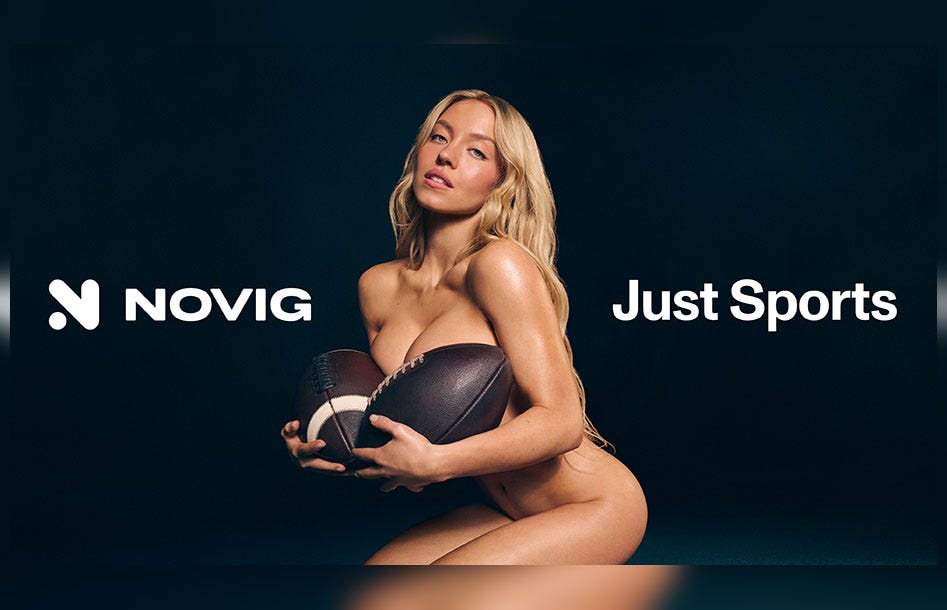
Ariarne Titmus, a four-time Olympic gold medallist, called it “a kick in the face to every woman who has dedicated her life to perfecting her craft”.
The backlash made total sense.
But, the response was the thing worth paying attention to.
My social media feed filled up with female athletes posting their real training footage. Weightlifters mid-lift, boxers mid-round, swimmers mid-lap — faces contorted with effort, muscles visible, zero concern for how they look.
Everything concerned with what their body can do. All under the message: “This is what a woman in sport looks like.”
Then, came the semaglutide ad I saw on Instagram.
A headless, faceless torso in a bikini (clearly AI-generated), a bottle of Ozempic in a beach bag, and white text overlay saying “Lose 15 lbs in 4 weeks”.
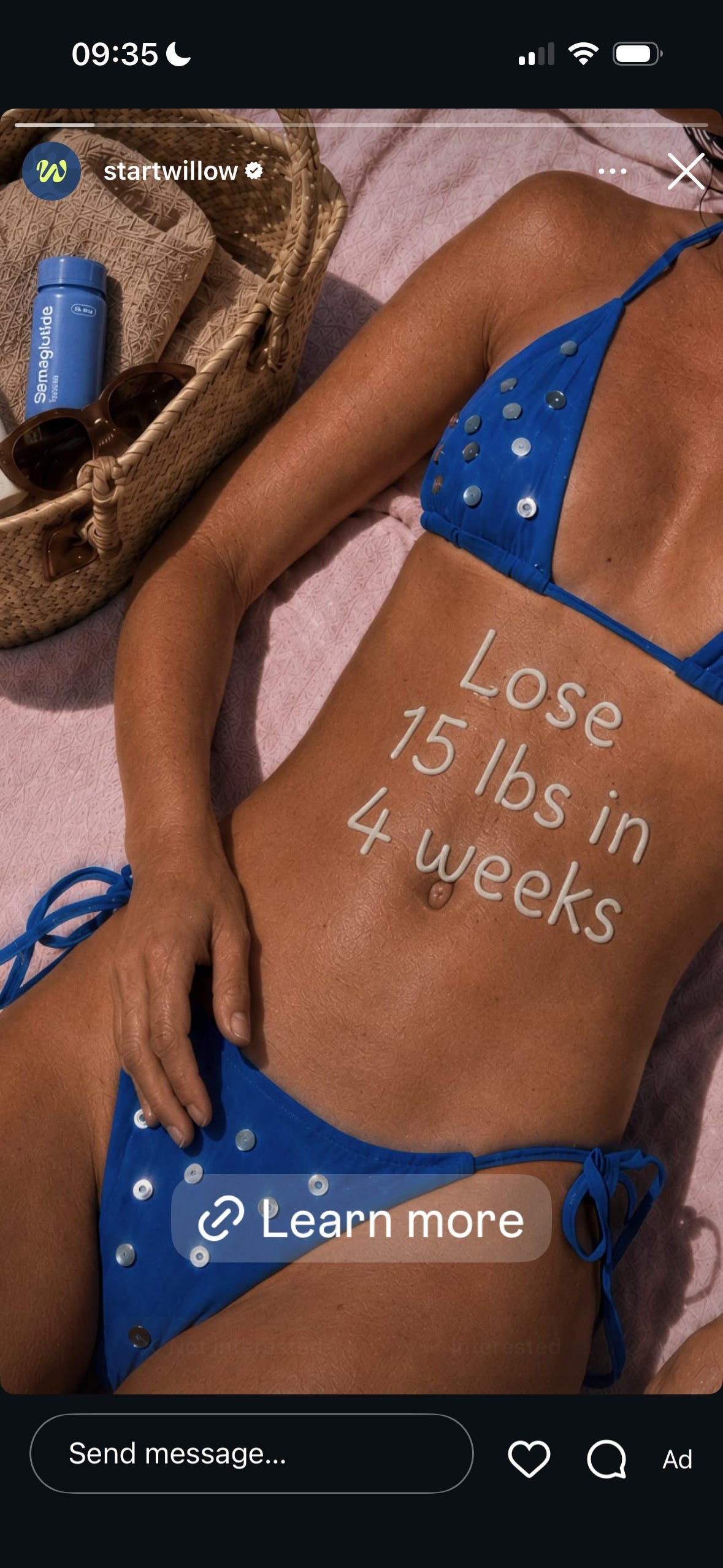
[I wrote about GLP-1s back in April and how they don't address why the body is holding onto weight in the first place, but they do anesthetize the problem. If you haven't read it yet, here it is.]
And, then the research.
A study published in February 2026 by Clemson University found that viewing AI-generated images of idealized bodies negatively impacts body image regardless of whether people know the image is AI-generated.
Even when you KNOW it’s fake.
Even when you KNOW the body in front of you was constructed by an algorithm trained on decades of the same impossible standard…the comparison still lands.
The harm still happens.
We’re now comparing ourselves to bodies that don’t exist and have never existed.
And, the algorithm serves them dozens of times a day.
What strikes me about all of this together is the sheer scale of the gap.
On one side: real women, in real bodies, doing extraordinary things with them. Lifting impossible weight, running impossible distances, building muscle and capacity and capability.
On the other: a marketing machine that has decided the most profitable version of women’s health is a headless stomach and a drug that makes it smaller.
Your body is not a before photo.
It’s not a problem to be solved in four weeks with a drug marketed through a disembodied stomach.
It is a system — complex, responsive, and capable of extraordinary things — that deserves to be understood, supported, and built up, not managed down.
The standard you’re being sold is not even human anymore.
So, you don’t have to measure yourself against it.
Your body was not designed to be decorative.
It was designed to work.
The female athletes flooding my feed this week already know that.
And honestly, so do most of the women watching them.
So, I think this is the next era of women’s health.
Not skinny…STRONG.
The body as something you develop, understand, listen to, support, and build, not something you control, shrink, or suppress.
No ad for a gambling platform changes that. If anything, the response to this one accelerated it.
I want to close with a question I’ve been sitting with myself, and one I ask every client. What is your relationship with your body right now, honestly? Not what you’re working toward, not what you used to feel, but rather, what it actually feels like to live in it today. Drop it in the comments. I read and reply to every single response.
And, if you’re ready to change that relationship, not by shrinking yourself, but by understanding what your body is carrying and what it needs to clear, I have a few spots open for 1:1 work this fall. The first step is a free 45-minute call where we map your terrain and figure out what your body actually needs.
Or, join me for my free live Detox Masterclass on November 17, where I’ll walk through the full sequence and take live questions.
And, if you have any other questions or comments, don’t hesitate to ask me any time in my weekly Q&A in my paid subscriber channel. If you’re not a paid subscriber, sign up below.
If you found this helpful, here’s how you can help:
Tap the heart so that I know it resonated
Leave a thoughtful comment—I read and appreciate every one!
Forward to a friend who might need to hear it
Share it with your community on Substack Notes, Instagram (tag @meghanswidler), or LinkedIn (and tag me there too!)
Upgrade to a paid subscription below to support deeper work like this
Your support means more than you know.
Not on my private newsletter yet?
That’s where masterclass invitations, cohort openings, and waitlists go. Substack essays cover the writing. My newsletter covers the offers. → Join here.
Very good compelling article. I’m glad you spoke out on it. I think we moved from body positivity to you have to be thin and ozempic. I don’t like it. Being extremely thin just doesn’t vibe with me. I think being curvy is great. Never understood the fascination. But glad you are speaking out on this.
FREE US!! Thank you for this.